
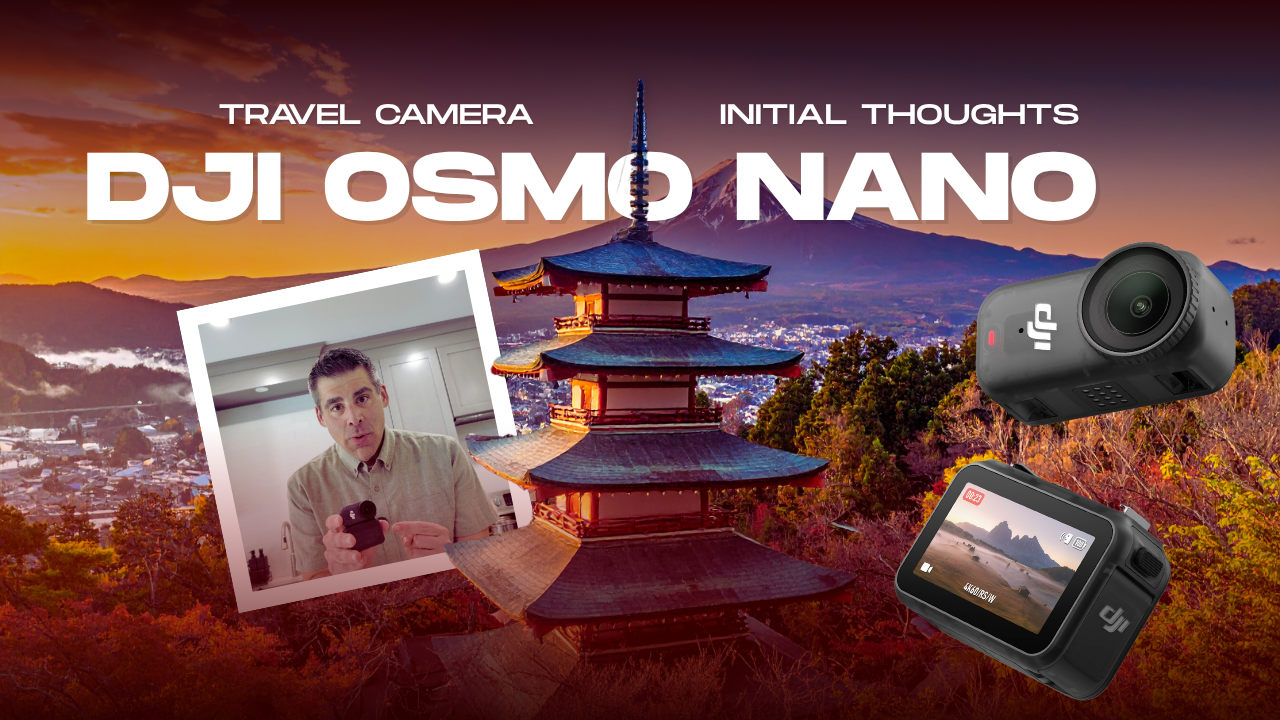
Are you looking for the ultimate compact, lightweight travel camera setup? If you have an upcoming trip where being discreet and mobile is a priority—like navigating the bustling streets of Tokyo or Kyoto—finding the right gear balance is crucial.
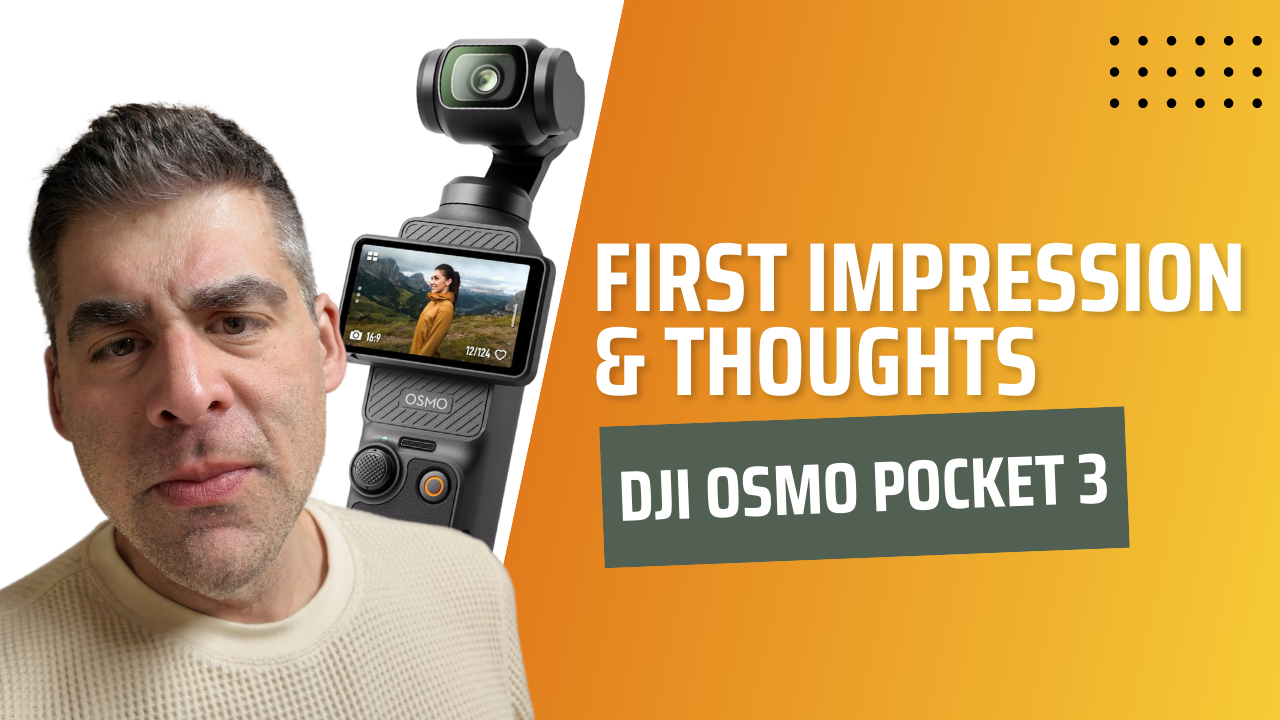
I recently purchased the DJI Osmo Nano specifically to help capture video for my upcoming trip to Japan. My goal wasn’t to replace my current workflow, but rather to find a device that could seamlessly compliment my DJI Osmo Pocket 3 while taking full advantage of the excellent DJI microphone ecosystem.
In this hands-on real-world review, I pair the Osmo Nano with the ultra-compact DJI Mic Mini during an outdoor walk-and-talk test. We will break down the performance, the battery life, and some distinct operational quirks you need to know before buying.
Why the DJI Osmo Nano is the Ultimate Travel Companion
When preparing for travel photography and vlogging in international destinations like Japan, two factors trump everything else: size and discretion. Walking around with a massive DSLR or a complex mirrorless rig can alienate locals and tire you out after 20,000 steps.
The first thing that strikes you about the DJI Osmo Nano is its footprint. It is incredibly light, highly versatile, and small enough to slip unnoticed into a jacket pocket. For solo travelers or run-and-gun creators, this discreet nature is worth its weight in gold. It allows you to capture candid, organic moments without drawing unnecessary attention to yourself.
Building the DJI Ecosystem: Pairing with the Osmo Pocket 3
If you already own the DJI Osmo Pocket 3, you might wonder why you need the Nano. For my travel setup, they serve as the perfect duo:
- DJI Osmo Pocket 3: Acts as my primary B-roll and cinematic narrative camera.
- DJI Osmo Nano: Serves as my quick-access, ultra-discreet secondary angle or quick-capture tool when deploying the Pocket 3 is too slow or too conspicuous.
Crucially, because both devices exist within the modern DJI ecosystem, managing files, color profiles, and accessories becomes frictionless. But the real magic happens when you introduce audio.
Audio Performance: Testing with the DJI Mic Mini
A beautiful image means nothing if your audio is unusable. For my outdoor walk test, I paired the Osmo Nano with the tiny DJI Mic Mini transmitter.
During a brisk outdoor walk-and-talk session, the microphone ecosystem worked exceptionally well under normal conditions. The Mic Mini clips on seamlessly, keeping the overall rig beautifully lightweight. The internal audio processing handled wind rejection admirably, ensuring clear vocals even while moving through noisy outdoor environments.
The Good: Battery Life and Stabilization
During my initial testing phases, the device excelled in two major categories:
- Battery Endurance: Despite its small form factor, the battery life proved to be very good. It easily handles extended shooting intervals throughout a day of casual touring without causing battery anxiety.
- Stabilization & Performance: DJI’s tracking algorithms and electronic stabilization remain top-tier. Moving at a normal walking pace produced fluid, cinematic imagery that rivals much larger setups.
⚠️ The Quirks: Detaching the Base Monitor
It is not all perfect, however. The DJI Osmo Nano introduces a few workflow quirks when you detach the main unit from its base monitor.
When running detached, the monitor goes black if you have a wireless microphone connected. If you plan to heavily utilize external audio like the Mic Mini while using the device split apart, you will need to be comfortable shooting without the screen so you aren’t caught off guard in the field.
Final Verdict: Should You Buy It For Travel?
Despite its minor operational quirks when separated from its base, the DJI Osmo Nano is an exceptional piece of engineering. Its combination of pocketable size, robust battery life, and excellent performance makes it a stellar asset for travel content creation.
If you are looking for a discreet, high-performing camera rig that syncs perfectly with your existing DJI gear (like the Pocket 3 and Mic Mini) for a trip to Japan or anywhere else in the world, the Osmo Nano absolutely deserves a spot in your camera bag.
Are You Planning a Travel Vlog Rig?
What is your go-to camera gear for international travel? Are you thinking about adding the Nano to your setup? Let me know in the comments section below!