

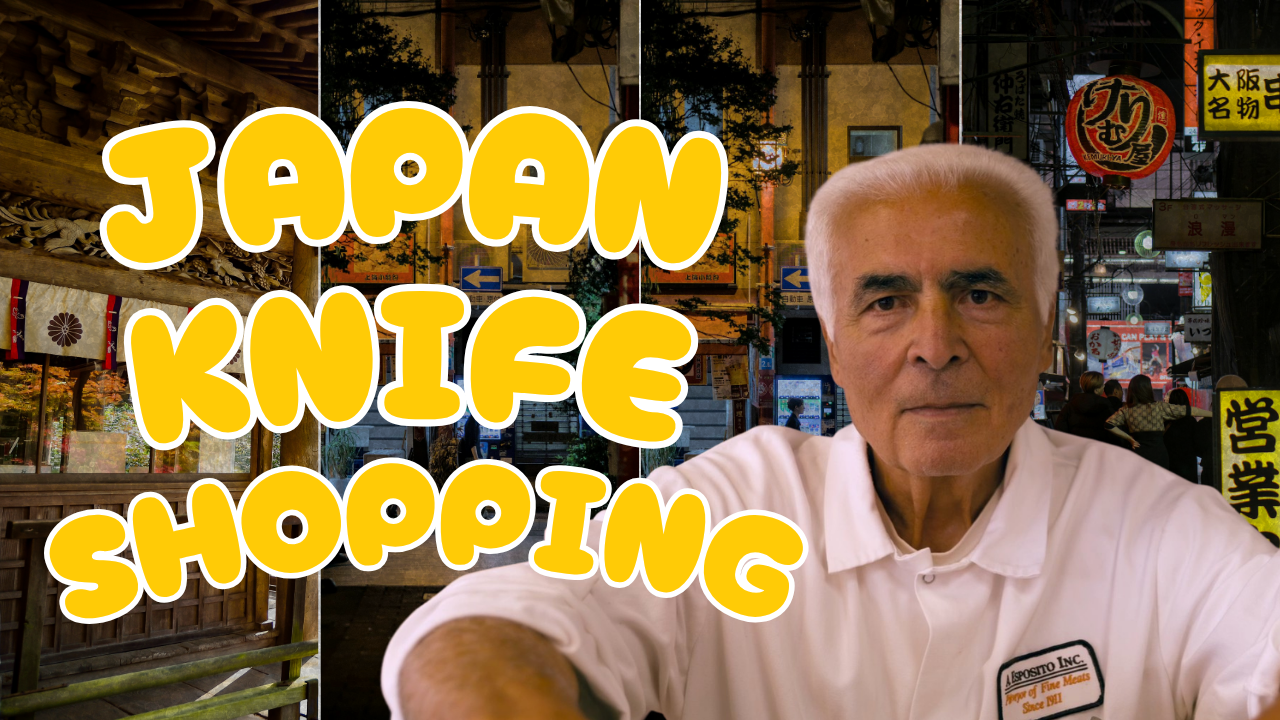
Buying a Japanese knife in Tokyo was one of the most personal missions of our Japan trip. My father, affectionately known as Mean Joe, spent his career as a butcher. He knows knives, uses them properly, and is not particularly easy to impress.
I did not want to bring him home a generic souvenir. I wanted to find a Japanese kitchen knife that he could actually use, have it engraved and hopefully receive the extremely rare Mean Joe seal of approval.
That search took us to Kappabashi, Tokyo’s famous kitchenware and restaurant-supply district.
Why Visit Kappabashi for a Japanese Knife?
Kappabashi Dougu Street is located between the Asakusa and Ueno areas of Tokyo. The approximately 800-meter shopping street contains more than 170 businesses devoted to cooking and the restaurant industry.
Although Japanese knives are a major attraction for international visitors, Kappabashi sells much more than blades. The stores offer cookware, ceramics, restaurant signs, commercial equipment, utensils, baking supplies and the realistic plastic food models displayed outside many Japanese restaurants.
The district felt more like a working commercial neighborhood than a polished tourist attraction. Restaurant professionals shop there, and many of the businesses specialize in very specific products.
That was part of what made Kappabashi interesting. We were not simply browsing another department store. We were walking through an area built around cooking, restaurant operations and traditional kitchen tools.
Choosing a Knife at Kamata Hakensha
After researching several stores, we visited Kamata Hakensha. The business began as a knife-sharpening shop in 1923 and has continued through four generations.
Because my father was a professional butcher, choosing the knife involved more than finding the most attractive blade. I needed to consider how he would use it, the knife’s balance, its weight and whether the handle would feel comfortable in his hand.
The staff helped us compare the available options and understand the differences between the knives. Having some idea of the intended use made that conversation much easier.
Once I selected the knife, Kamata added a personalized engraving. That transformed it from a useful kitchen tool into a gift created specifically for Mean Joe.
Japanese knives can be beautiful, but this was not intended to sit untouched in a display case. I wanted something my father would appreciate as a working butcher and continue to use at home.
Do Some Research Before Entering a Knife Store
Kappabashi’s knife stores can become crowded, and many of them are relatively small. During our visit, limited counter space was sometimes occupied by shoppers who had not researched the basic knife styles, asked extensive questions and then remained in the store without making a decision.
That can become frustrating for the staff and for customers who are ready to purchase something.
You do not need to become a knife expert before visiting. However, it helps to know:
- How the knife will be used
- Your approximate budget
- Whether you want a multipurpose or specialized blade
- Who will be using the knife
- Whether the recipient can maintain a high-carbon blade
- Whether you want engraving
Arriving with that basic information will help the store recommend an appropriate knife without turning the visit into a lengthy introductory lesson.
Kappabashi Is Cool, but Plan Your Breaks
I enjoyed Kappabashi, but the district was not especially convenient when we wanted to stop, eat or relax.
We found fewer obvious restaurants, cafés and public restrooms than expected. This is not an enclosed shopping center with a food court and bathrooms on every level. It is a long commercial street made up of individual specialty businesses.
My practical advice is simple:
- Eat before arriving or choose a restaurant in advance.
- Use a restroom before beginning your shopping.
- Bring water during the warmer months.
- Wear comfortable shoes.
- Bring your passport if you plan to use tax-free shopping.
- Confirm where any tax refund must be processed before leaving the area.
Kappabashi is worth exploring, but it is better approached as a focused shopping mission than as a neighborhood where you will casually spend an entire day relaxing.
Giving the Knife to Mean Joe
The real test happened after we returned home.
My father is famously hard to please, particularly when the gift involves a tool connected to his profession. He knows immediately whether a knife feels right and whether it is something he would actually use.
The video ends with me giving him the engraved knife and waiting for his reaction.
To my surprise, he appeared to genuinely enjoy it.
There was no exaggerated response or emotional speech. That is not Mean Joe’s style. However, his reaction was positive enough that I considered the mission a success.
For a man who spent his career handling knives and is not known for pretending to like things, that may have been the strongest possible endorsement.
Was Buying a Japanese Knife in Tokyo Worth It?
Yes. Buying a Japanese knife in Tokyo gave me a useful souvenir, a memorable shopping experience and a personal gift tied directly to my father’s career.
Kappabashi was one of the more interesting shopping districts we visited because it felt specialized and practical rather than designed entirely around tourists.
The stores can become crowded, and the area requires a little planning if you need food or a restroom. However, travelers who research their options and arrive with a clear purpose should have a much better experience.
Most importantly, the engraved knife managed to impress Mean Joe—or at least come as close to impressing him as anyone could reasonably expect.
Learn more from the official Kappabashi Dougu Street website and Kamata Hakensha .